Showing posts with label Drawing. Show all posts

Monday, October 21, 2024

One Peaceable Kingdom at Drawing Rooms, 9/19/24-10/26/24

“One Peaceable Kingdom" at Drawing Rooms, 9/19/24-10/26/24

Curated by Anne Trauben
By PE Pinkman
10/21/24

"One Peaceable Kingdom," curated by Anne Trauben, invites you into a vibrant exploration of peace and harmony through the lens of nature and animal life. Drawing inspiration from Edward Hicks' iconic "Peaceable Kingdom" paintings, of which there are 62 known versions, the collection of art on display features six diverse but thematically connected artists—Beth DiCara, Cheryl Hochberg, Claire McConaughy, Pat Brentano, Shelley Haven, and Terri Amig. The over 60 pieces in this exhibition, encompassing painting, ceramic sculpture, drawing, printmaking, and collage, immerse you in a lush, otherworldly or maybe preternatural landscape populated by animals, and natural environments, each piece acting as a conduit for compassion and unity.

You’ll be drawn in by the lushness and gaze of the four works inside the front entrance. I felt as if I’d entered an entirely different gallery. As a regular art viewer, I have formed ideas of what to expect from each of the spaces I frequent. For me, Drawing Rooms is an institution that typically prompts you to think deeply about what you’re viewing causing you to look over each work multiple times. From the moment one enters this exhibit, the visual experience and the soundscape of nature—animal calls and ambient sounds—envelops the space, creating an immersive quality of the experience. My first reaction was one of totality, rather than individuality. The auditory backdrop cleverly underscores the thematic core of the exhibition: a quest for pastoral tranquility and understanding in a world often marked by division.

Each artist in "One Peaceable Kingdom" brings a unique perspective to the overarching theme of peace through nature. The four initial pieces, a large-scale oil on canvas painting by Terri Amig, entitled, “A Delicate Balance”, gives us a direct painting of a sheep with two birds. This is combined with two wall sculptures, “Rabbit Head” and “Ram Head” by Beth DiCara, and Cheryl Hochberg’s, “I Will Protect You,” a large mixed media work on paper of two crows and a deer standing in a sort of halo, set the show up right out of the gate.

Terri Amig’s works evoke a profound emotional connection with the viewer. In pieces like the above-mentioned “A Delicate Balance” and "Amour," (seen later in the exhibit) her portrayals of a sheep and a deer gaze with gentle eyes, compel us to reflect on the tenderness inherent in the natural world. Similarly, her painting "Heavenly Bodies," with its regal sheep silhouetted against a biblical sunset, invites contemplation of not just beauty, but also a deeper, almost spiritual resonance. This same scene replaced by humans, often saints, has been repeated throughout history, only here the animals emote the transcendent centeredness.


Terri Amig, A Delicate Balance, 36 x 36 in, oil on canvas, 2022

Claire McConaughy’s work focuses on place rather than creature, seamlessly blending historical references to classic American landscape painting, but with a contemporary palette and brush work. Her large-scale pieces, such as "Meet Me at the Tree" and "Climbing the Hill," are dense with color and bravura texture, transporting the viewer into the heart of a vibrant, green forest. These works resonate with a sense of belonging, suggesting that we are all part of this interconnected natural tapestry, the same one we have been negatively transforming over these many years. For anyone who is a nature-lover, seeing these paintings will make you feel like you are swimming in the richness and color of the natural world.

Claire McConaughy, Meet Me At the Tree,
64 x 48 in, oil on canvas, 2023

Resonant of the many images we’ve all seen of dead animal busts in castles and grand homes, Beth DiCara’s creations challenge traditional representations of animals, invoking the aesthetic of hunting trophies while transforming them into symbols of kindness and respect. Her work cleverly subverts the notion of dominance over nature, presenting animals like a goofy bear or a regal giraffe as figures deserving admiration rather than conquest. The playful yet respectful tone in her mounted heads and self-standing sculptures invites viewers to reconsider their relationships with the animal world. In a manner like the stuffed animal artist Mike Kelley, DiCara deftly undermines the potential for these works to be seen as ‘cutesy’ by keeping them grounded in a rather gruesome past.

Beth DiCara, Rabbit head, 11 x 8 x 4 in,  ceramic, 2024

Cheryl Hochberg's pieces carry a mystical quality as seen in "I Will Protect," where a deer encircled in gold emanates a sense of grace and vulnerability. This piece, alongside others like "Bedfellows," seamlessly blends painting, printmaking, and collage, producing an ethereal atmosphere that encourages introspection about humanity's role in the animal kingdom. One of the real standouts in the show is also a Hochberg work. The piece titled “Redemption Woods,” is full of mystery, confrontation and contemplation, brought on by the unexpected and strong use of gold paint, strategically placed in the lower center and at the horizon. This work brings together three major elements of the show, beauty at the act of painting such a scene, fear at what may be lurking in such a dark wood and connection to an almost hidden animal that we feel both compelled towards and pushed away from. This is the ever-ongoing dilemma of modern man in the wilderness.

Cheryl Hochberg, Bedfellows, 60 x 40 in, watercolor on paper

Pat Brentano and Shelley Haven complement this narrative by emphasizing the intricacies of nature. Brentano’s intricate collages and drawings reveal the complexity of trees and landscapes. They are layered with natural imagery that both reveals and hides the details of this world. It’s hard not to be drawn into her web of twigs, branches and leaves. And without a doubt her ink works highlight her talented hand.

Pat Brentano, Buffy, 10 x 10 in, collage, 2024

Haven’s works invite viewers to traverse personal memories of nature’s beauty, serving as reminders of the fragility and resilience of the natural world and highlighting the need for empathy and understanding. They seem to show us the geology of the world in its form as a skin, full of age and cracks, but redolent of the beauty that comes with time and maybe wisdom.

Shelley Haven, Grand Canyon Of Yellowstone II, 36 x 36in, oil on panel, 2020

And as referenced previously, Terri Amig’s animals land us directly in the Peaceable Kingdom. We are presented with animals that are painted in such a way as to be open to us, to our yearnings for a friendly and accepting world of other creatures. Yet, I have to wonder if there isn’t a level on which their mostly neutral gazes cover over a general disdain of humankind. We are, after all, doing our level best to reduce what we have been given to a wasteland for both them and us. These animals confront us as much as they acknowledge us.

The exhibit operates on multiple levels, inviting viewers to engage with the artwork not just visually, but emotionally and intellectually. At its heart, "One Peaceable Kingdom" encourages contemplation of what it means to coexist harmoniously with nature and one another. Each piece acts as a conversation starter, prompting reflections on the broader implications of peace—whether it be through shared empathy for the animals portrayed or through an acknowledgment of our interconnectedness within the ecosystem.

The exhibition posits that animals, much like humans, navigate complex relationships of cooperation and conflict, urging viewers to foster compassion and understanding in their interactions with both nature and society.

"One Peaceable Kingdom" stands out as a thought-provoking and beautifully curated exhibition that successfully transports its audience into a realm of tranquility and reflection. The diverse styles and approaches of the featured artists create a rich tapestry that engages the senses and prompts critical thinking about peace in today’s tumultuous world.

The immersive environment, enhanced by the thoughtful soundscape, elevates the experience, allowing viewers to momentarily escape the stressors of daily life and enter a serene if potentially mundane space of contemplation. By weaving together themes of empathy, coexistence, and the beauty of the natural world, the exhibition not only honors the legacy of Hicks’ work, but also offers a fresh perspective on the urgent need for compassion in an increasingly divided society.

"One Peaceable Kingdom" is more than an art exhibition; it is a call to action, encouraging us to foster peace and understanding both within ourselves and in our interactions with the world around us. As we navigate our complex relationships with nature and each other, this exhibition serves as a poignant reminder of the beauty that arises from empathy, unity, and respect.

PE Pinkman is an artist, curator and the director of the Watchung Arts Center, a 501c3 non-profit. His artwork blends vibrant colors and dynamic forms to explore themes of identity and urban life, creating a striking dialogue between chaos and harmony. Learn more about PE here.

Saturday, June 29, 2024

Color, Shape, Line: Six Degrees of Separation between Andrew Zimmerman, Fran Shalom and Jesse Hickman, The Terrarium Gallery at Drawing Rooms, 5/18/24 - 6/29/24

Response to “Color, Shape, Line: Six Degrees of Separation between Andrew Zimmerman, Fran Shalom and Jesse Hickman”, 5/18/24-6/29/24
Curated by Anne Trauben.
By Andrea Epstein
6/27/24

“Color, Shape, Line: Six Degrees of Separation between Andrew Zimmerman, Fran Shalom and Jesse Hickman”, curated by Anne Trauben, is showing in the Terrarium Gallery at Drawing Rooms. The three artists in this group exhibition exemplify three very distinct and original approaches to abstraction featuring a formal and elemental approach to painting, drawing and sculpture in it’s purest form. Although each artist has a truly unique approach to their own practice, what struck me immediately on entering the exhibition space, was the synchronicity between the work. There is such an affinity between all 3 artist’s sensibilities, so that the individual pieces create a wonderful visual conversation that felt very impactful to me. The insightful and careful curation by Anne Trauben clearly places emphasis on the shared visual elements in the work as a group. The press release states, ”Each artist explores the formal qualities of color, shape and line in a playful handmade way”. 

The playful, whimsical, qualities in Fran Shalom’s paintings are immediately apparent in her animated bright color choices which evolve from a very layered build up of paint over a period of time, as well as the quirky and totally unique shapes that reference aspects of the human body, but are also very ambiguous and open to interpretation as objects or other beings altogether. The artist describes the paintings as, ”ambiguous characters who inhabit my studio, keeping me company and often engaging in silent conversation.” This statement expresses exactly my gut response to these beautifully crafted paintings. I saw them as individual beings reaching out from their square confines, speaking to each other, the other artworks and to me. They tell a story of color, line and shape that has a personal narrative all its own.  

The concept of the pared down shapes taking on an animate personality is particularly evident in the paintings, “Shoot the Breeze” in which a flesh and maroon striped horizontal curvilinear shape protrudes ¾ of the way down from the curved irregular large orange oval shape which clearly refers to a human profile with a cartoon like bubble.


Fran Shalom, Shoot the Breeze, 24x24, oil on wood, 2023

This painting is adjacent to a piece by Andrew Zimmerman, “Every Other”, a small arched shaped laminated wood wall sculpture painted with vertical stripes with a high gloss automotive paint in a color scheme of deep rich brown and Indian red that very strongly echoes the palette in “Shoot the Breeze”. 


Andrew Zimmerman, Every Other (side view), 11 x 8in, Automotive Paint on Wood, 2023

A beautiful example of the shared formalities and similarity in shape, line and color is where two of Fran Shalom’s paintings, “Sashay” and “Go-between” both 24X24’ squares share a wall with Andrew Zimmerman’s large shaped painting, ”Mitten”. Whereas in Zimmerman’s large construction composed of four separate organic and geometric pieces joined together in a subtle yet quirky arrangement, the entire piece is covered with white automotive paint rendering it with a slick smooth surface. At first glance it seems that Zimmerman’s assemblage of shapes should be seamlessly attached, but on closer inspection it becomes obvious that the artist is very deliberate in his use of irregularity and possibly accident when it comes to where the edges meet. The artist describes his approach: as an exploration of “the intersection between painting and sculpture, art and design, the hand made and the mass produced” Zimmerman explains that when fabricating the sculptures and wall constructions, he uses hand held woodworking tools that create variations in line that amplify the unique hand of the artist. All three artworks share the use of the color white. In Shalom’s two paintings, the white is used as accents that form a strong contrast with the greens and black of the larger shapes and backgrounds, creating a striking figure ground dynamic.


Fran Shalom, Sashay, 24 x 24 in, oil on wood, 2023


Fran Shalom, Go-Between, 24 x 24 in, oil on wood, 2022

Andrew Zimmerman, Mitten, 48 x 36 x 1.5 in, automotive paint on wood, 2024

Throughout the installation of these three abstractionists, one can really contemplate the significance of the varied treatment of edges and the essential defining role they play in these artist’s works. As far as the treatment of the surfaces themselves, there are also many delightful surprises. On first encountering Fran Shalom’s paintings as a group and at a distance, I concluded that the surfaces were more uniform and smoother then they are. After studying them up close and taking the time to really look, one can see that there is a profound history of layers of built up oil paint that also reveal subtle variations in brushwork, texture and color with lovely surprises lurking beneath the surface.

Speaking of variations in surfaces brings me to the work of Jesse Hickman. Hickman’s paintings which utilize black acrylic and charcoal drawn or painted on burlap mounted on wood rectangles and squares also struck me as very minimal at first glance, but the use of the unconventional material of the recycled burlap bags imbues his pieces with a very immediate textural essence that is also surprising, playful and fun. The curator, Anne Trauben, did a wonderful job of displaying three of Hickman’s paintings (which were not conceived or created together) as a group, which really made the individual pieces sing for me. The grouping composed of, “An Interrupted Arc and the Number of Times I Peed Within a Square and a Rectangle”, on the top left, “An Egg and Arcs Within a Square and a Rectangle”, on the top right and “Emphatically Within A Square And A Rectangle”, anchoring the group on the bottom, allows the viewer to see the lyricism of the linear elements, the ovals, half circles, and the color within the monochromatic textured rectilinear format and is thus transformed. A very important part of Hickman’s practice are daily drawings, nine of which are also displayed in lovely groupings that document the artist’s process, also very compelling in their own way.   


Jesse Hickman, charcoal and acrylic on burlap, 2023 

The vibrant synergy that exists between all three artist’s paintings. sculptures and drawings is clearly illustrated in how they employ irregular organic shapes, deeply felt definition of line, limited palettes, and the essential role of the edges in all the artworks. Although one can enjoy each artists creations as individual pieces, the most exciting aspect of this installation is the way the paintings, sculptures and drawings are grouped together, how beautifully they echo each other and make more visible the formal components of pure abstraction that each artist explores in their particular processes. I have to confess, on first entering the gallery, apart from my immediate response to Shalom’s beautiful bright, unusual colors and quirky animated figures, I thought the work was very minimal. But on closer observation and careful looking, I found that there is nothing about this show that is minimal at all.  

Color, Shape, Line: Six Degrees of Separation between Andrew Zimmerman, Fran Shalom and Jesse Hickman is on view at The Terrarium Gallery at Drawing Rooms through 6/29/24.

Andrea Epstein is a painter and printmaker who creates vibrant abstract mixed media works on paper incorporating a variety of printmaking techniques in her own print studio in Berkeley Heights, NJ. Learn more about Andrea here.

Sunday, April 7, 2024

PE Pinkman: Neither Here and There, The Alcove Gallery at Drawing Rooms, 3/1/24 – 4/13/24

Response to “Neither Here and There,” an exhibition by PE Pinkman
By Mona Brody
April 4, 2024

A single self-portrait can offer a provocative glance into an artist’s private life. But when one has an opportunity to view and explore 100 portraits from 100 days, a visual cacophony occurs.  Artist PE Pinkman offers the viewer that opportunity in his series, “100 Days of a Pandemic” and “Not Who You See(m)” as part of the broader exhibition on view, “Neither Here and There” displayed in The Alcove Gallery at Drawing Rooms, 926 Newark Avenue, Jersey City, NJ, curated by Anne Trauben.


Views from “100 Days of a Pandemic” by PE Pinkman
The Alcove Gallery at The Drawing Rooms

Pinkman’s series, “100 Days of a Pandemic,” allowed me to be a voyeur of sorts, as I delved into the inner life of a man’s psyche, emotional state, and various identities. This diaristic practice began January 1, 2021, nine months after the Covid Pandemic started and concluded April 11, 2021. PE Pinkman was completely into the throes of a global pandemic, unbridled disinformation, Black Lives Matter protests, an election unlike any in history, unprecedented vaccine development, and general mistrust. 


Day 4, I Can’t Breathe, 14 x 11 in, mixed media on paper, 2021


Day 24, Fake News, 14 x 11 in, mixed media on paper, 2021


Day 1, Do You Feel the Same Way I Do, 14 x 11 in,
mixed media on paper, 2021


It was clear to me that his commitment to this daily practice of drawing one drawing a day for 100 days, while isolated in a small apartment, was a necessary process of reflection and self-healing. This practice allowed him to find the motivation and ultimately the content for this self-directed series. Begun in a time of introspection, the series morphed into an important and profound work of art. 


Francis Bacon’s self-portrait series from 1975, "I've Had Else to Paint but Myself", cries out to me in the same manner as Pinkman’s series. Both artists face solitude and fear in a delicate balance of sanity, fantasy, and response to a challenging world.


Day 48, You Mean I can Be Brave and Afraid, 14 x 11 in,
mixed media on paper, 2021


I've Had Nobody Else to Paint but Myself by Francis Bacon
14 x 12 inches, oil on canvas


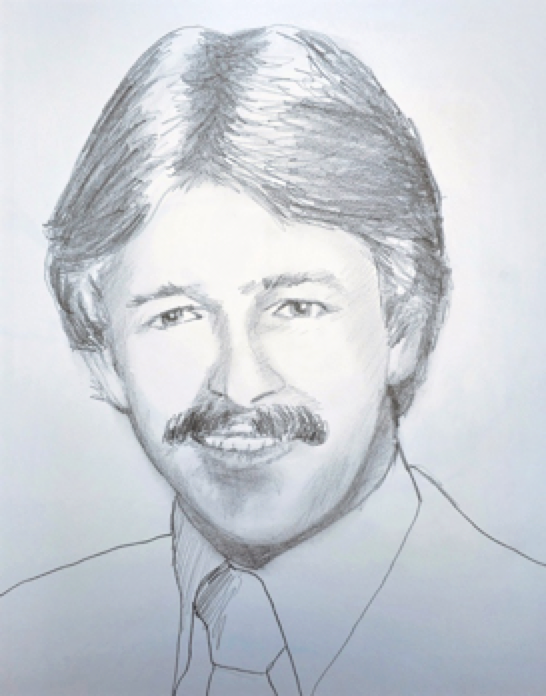
Pinkman’s other series of self-portraits from birth to a futuristic view as him as an older man, "Not Who You See(m)" takes us through the stages of his life, experiences, and challenges. Materials and touch allow the memory of youth and the reality of age and wisdom to emerge. 


                                     #22, 14 x 11 in, graphite on paper                                      


#60, 14 x 11 in, graphite on paper

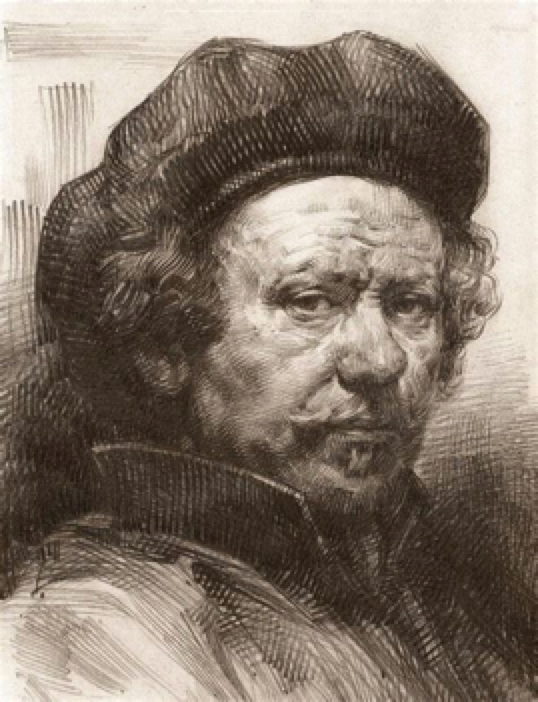
While responding to PE Pinkman’s drawings from this series, I had the desire to revisit Rembrandt’s archive of self-portraits. Rembrandt’s self-portraits have been an important example of documenting and recording self-exploration for artists over the centuries, and they continue to this day.  I am fascinated by the psychological intensity of Rembrandt’s late self-portraits and its relationship to Pinkman’s drawing of how he sees himself now.


Self-portrait looking in a mirror, Rembrandt van Rijn, Age 63,
possibly black conte on laid paper, 1669 


#67, 14 x 11 in, graphite on paper

The last four years have changed us. It’s changed how we communicate and interact with one another, and it’s changed who we are as individuals. PE Pinkman has thoughtfully and skillfully helped us heal through a repetition of his own drawn image.  By experiencing Pinkman’s exhibition, the viewer can reflect deeply into oneself by employing humor, exploring the mysterious, the bizarre, and the uncomfortable parts of the human spirit. This self-understanding gives us permission and strength to manage the chaotic and harmful forces that lie from within and the world around us. 

"Neither Here and There" will continue on view at Drawing Rooms Alcove Gallery until April 13, 2024.

Mona Brody is an artist whose studio is at Manufacturers Village in East Orange, New Jersey. Learn more about Mona here.

Monday, March 25, 2024

From a Tree Grows a Forest: an Exhibition Honoring Professor and Artist Edward S. Eberle, The Terrarium Gallery at Drawing Rooms, 3/1/24 - 4/13/24

Response to "From a Tree Grows a Forest: an Exhibition Honoring Professor and Artist Edward S. Eberle"
By Claire McConaughy

March 21, 2024


Edward S. Eberle 1944-2023

There are many influences on an artist’s body of work, but a foundation of encouragement, sharing, nurturing and love from a teacher can be the platform from which one’s creative work can truly rise. The exhibition “From a Tree Grows a Forest: an Exhibition Honoring Professor and Artist Edward S. Eberle” has at its heart, artworks made by Ed Eberle from the 1980s to 2017, and works from six of his former students who together pay tribute to their teacher and his influence on their art and lives. There is also a touching video made by his son, JPC Eberle, of the artist as he throws and forms the clay that he spent his life following. JPC's video features many closeups of Ed's hands forming sculpture which show his deep connection to clay that was more than a material; it was an extension of himself. Ed's former students in this exhibition are a sampling of the many artistic lives he touched during his time teaching at Carnegie-Mellon University, the Philadelphia College of Art and through his ceramic studio in Pittsburgh. Curated by Anne Trauben, the group of artworks show the connections between the teacher, students and true friends who respected and enriched each other’s lives in art.

The focus of the exhibition is Eberle’s unique ceramics. The featured pieces in this review range in size from a 4.5" x 15" x 15” shallow bowl to a vessel that is three feet tall and two feet wide. Eberle’s greater body of work includes explorations with drawings and very large ceramic sculptures that are shown in the catalog as being almost human size and having the presence of visitors in his studio. Eberle’s vessels are covered with stream of consciousness drawings of which he says “… I don’t have a specific story to tell. The story, if there is a story, is only seen after the piece is finished, but it won’t be one story, it will be many stories, if there’s a story at all.”1 With or without a specifically intended story, the drawings are complex and completely captivating. They scrawl across the curves and bumps of the surfaces, many figures interlaced and overlapping as if they are simultaneously depicting the past, present, future, and a disorienting fantasy world. The scratchy black terra sigillata and stain lines on matte grey-white porcelain clay are loose and uninhibited, covering the surfaces without logical sequence, and can be picked up in any area and followed in an unfolding narrative/non-narrative. Images are of figures (some have wings, or monk’s robes, or are multi-headed), patterns, men and women’s faces (some with halos or books for hats), animals, birds, and expressive marks and brushstrokes. They are derived from this world, but the world they exist in doesn’t rely on logic. 


Edward S. Eberle, Draw A Line With A Feather, porcelain,
terra sigillata, 8.5 x 5 x 5.5, 2019

Eberle’s works in the exhibition are mysterious and metaphysical the way “Alice in Wonderland” is disorienting and magical. A special version of this disorientation is shown by the porcelain sculpture “Complex” (2017). “Complex” is a simplified head with facial features entirely covered with scratchy black drawing that reminds one of old age wrinkles, facial tattoos, or an image of what someone could look like if the stories and people of their life were visible the first time you met them. There is a hole at the top of the head surrounded by black, which could be a portal to and from the inside of the head/sculpture/person and everything else/people/nature/God/the universe and back again.

Edward S. Eberle, Complex, front, side and back views, 2017,
9.5 x 7 x 8.5, porcelain, terra sigillata and stain

His drawing is key to his ceramics and several ink drawings on paper are also on view in the exhibition. One large ink drawing, “Landscape” (1990), shows Eberle’s expressive mark making bouncing across the paper in movements like animals playing or dancers in a more abstract expressionist style.


Edward S Eberle, Landscape, 29 x 40, paper, ink, acrylic, 1990


This is an opportunity to see Eberle’s mark-making shown in the stoneware piece, “Number Two” (1990), and “an Appearance” (late 1980s), as a pre-cursor to the surreal depictions in the more recent works.


Edward S. Eberle, Number Two, stoneware, terra sigillata, stain,
35 x 24 x 13, 1990


Edward S. Eberle, an Appearance, 4.5 x 15 x 15, porcelain,
terra sigillata, stain, late 1980s

The artistic and very deep connections Eberle made are evidenced by his six students’ artworks shown alongside his masterful ceramics. Both Graham Marks and Ian Thomas work in ceramic sculpture. Marks' pieces are painterly glazed candelabras that are wonky, and delightful. The pieces are made of ribonny ropes and organic shapes that pour through each other like activated painterly lines that culminate at a flower-like blossom for the candle. They move like marine plants gently swaying under the sea. Ian Thomas’ pieces are simplified head-shaped vessels that have incised comic faces that emote quirky moods, such as “Smile” and “Indifference” (both 2022). The faces’ expressions are drawn in a lighthearted way, as if a kid grabbed a stick and, through a few quick strokes, made the clay into a live, feeling entity.  


Graham Marks, Candelabra, ceramic, 13 x 10, 2022


Ian Thomas, Smile, porcelain, woodfired, 9.5 x 7 x 7, 2022

Ed Eberle fostered his students’ art practices, whether they were working with clay or other mediums, and several of them in this exhibition present drawings, paintings, and needlepoint.


Denise Suska Green and James Pustorino share large scale abstractions filled with color, shapes, and movement. Their surface relationships differ greatly in style and material, but their underlying spiritual interests have a kinship. Suska Green uses handmade paper of nuanced color and organic forms evoking nature. “Surfsong” and “Cove” (both 2020) have references to environmental beauty while using materials sourced from repurposed domestic textiles and linen garments. Her use of recycled natural materials shows a dedication to the environment that is treasured and revered for something more than our human use of it. James Pustorino offers a large abstraction of bold, vivid color exploring narrative through space and composition in “Container for the Universe” (2023). The convoluted movements twist and turn into each other creating interlocked passages. The segmented abstract shapes pull the viewer through a speedy roller coaster ride that flips and twists without paying attention to gravity or general laws of physics. Even though he uses synthetic materials and heightened color on geometric shapes, the painting shows Pustorino’s sketchy drawing that allows the viewer to feel a human presence in the image while the overall image feels like a macro view from the eye of the universe.


Denise Suska Green, Cove, handmade paper, 69 x 41.5, 2020


James Pustorino, Container for the Universe, acrylic and pencils on dDuralar,
80 x 75, 2023


Greg Kwiatek’s square needlepoint, “Untitled II” (2021) is elusive. The mysterious object feels more like an ancient Yantra than a 21st century endeavor. The description of the piece involves geometric relationships gently, meditatively, repetitively stitched on a grid, making one assume that process is a key element in the piece. Based on its symmetry, the composition looks like the result of planning, but the artist states that decisions are made intuitively. It becomes a diagram of harmonic relationships that is clear and bright in its simple geometry, and reflects craft, precision, and dedication.


Greg Kwiatek, Untitled II, needlepoint, 15 x 15, 2021

Vast open spaces of thought and reflection can come from seemingly minimal images. Scott Vradelis’ rectangular, color relationship paintings allow for aesthetic interpretations of moments, experiences, memories or the concept of non-content. His color choices are compatible and soothing. Seeing the slate-grey/blue rectangle, overlaid with a rich burgundy rectangle of pulled brushstrokes in “Poem for Studio Cricket Variant 7” (2021), in-person is truly the only way to experience Vradelis’ work. The scale relationships between rectangles that can function as windows or frames also have impact on the experience of the work, as each one feels specifically determined, perhaps because they are based on weight of color and value in a purely visual sense, or on the weight and value of an intangible essence. 

Scott Vradelis, Poem for Studio Cricket Variant 7, pigment in acrylic binder on
prepared dibond panel with aluminum angle backing, 25.5 x 41, 2021


“From a Tree Grows a Forest…” is a perfect title to capture the extent of the beloved professor and artist Ed Eberle’s legacy, which has clearly grown to forest dimensions. 


Images from “A Drawing Thrown”, 2016 video by Edward. S Eberle and JPC Eberle

"From a Tree Grows a Forest: an Exhibition Honoring Professor and Artist Edward S. Eberle" will continue on view at Drawing Rooms Terrarium Gallery until April 13, 2024.

Claire McConaughy is an artist. While not a former student of Professor Eberle, she was aware of his influence and the admiration he received from his students, friends, and fellow artists. Learn more about Claire 
here.
  1. Contemporary Craft, “Ed Eberle in His Studio”, Video produced by Terry Rorison and David Newbury, YouTube, August 25, 2016, https://www.youtube.com/watch?v=04Qqqv4J_1s

Wednesday, November 8, 2023

Lucy Rovetto: For the Love of the Body at The Alcove Gallery at Drawing Rooms, 9/29/23 - 11/11/23

Lucy Rovetto’s Career-Long Exploration on the Human Anatomy’s Response to Emotional Stimuli at Drawing Room's Alcove Gallery
By: Lumane Luma
11/7/23


On view at Drawing Rooms Alcove gallery, Exhibitions Director Anne Trauben curates the career-survey "Lucy Rovetto: For the Love of the Body" with works spanning from 1989 - 2022. The separations of decades within the exhibition displays Rovetto’s psychological response to the zeitgeist. Years 1989 and 1990 feature photographs of intimate encounters with the body with compositions that show the beauty of its form. From 1994 - 1996 Rovetto’s sophisticated artistic exploration began to formulate. 

Cross-Eyed by Lucy Rovetto

In her 1994 “Cross-Eyed,” small photographs of repeated images of the nude artist laid forward are collaged in a sequence of rows. The image likeness appears as a coronary examination while the composition’s top center of the overexposed photographs are juxtaposed to appear as procedure lights seen above a patient before drifting to unconsciousness.


Squeeze with Words by Lucy Rovetto

In the 2010s, Rovetto’s medium focus on drawings evoked the encroaching claustrophobia of anxiety. 2014’s “Squeeze” and “Squeeze with Words'' appears as a progression of intrusive thoughts as both works are a rendition of a figure in a fetal position, though “Squeeze with Words'' is juxtaposed with illegible writing decreasing in scale to whispers as the ink goes from black to red. Also from 2014, “Facing Myself Right” is a large ink on wood outlined profile portrait of the artist that conveys Rovetto’s self-examination stripped to subtle details, a humbling confrontation of oneself to question what is the basis of identity.

Bound by Lucy Rovetto

For the new decade, Rovetto deters from a state of introspection, instead provoking the viewer with an unsettling scenario in "Bound", "Captured," and "Moth" which depict different perspective shots of an unidentified femme figure held restraint. The figure is sat in a chair, mouth bound with hands tied behind their backs. The viewer is a helpless observer behind the serrated screen of the grim scene. Drawn in comparison is the helplessness of observing through our devices, the chaos amidst the Covid-19 outbreak and socio-political upheaval in 2020.

Rovetto then symbolically details the gravity of emotions on the body with “Hanging Series.” Suspended from wire hangers, the works on paper appear like a play on the expression, “Hang to Dry,” which is likened to the feeling of being left to suffer alone. Of the three “Hanger Series,” Girls Got Guts (see postcard image above) is most intriguing, as it is a paper collage diagram of the viscera. It functions as an emotional signifier of our internal truth.

The dedication Rovetto has for exploring the human form has opened her horizon to utilize various forms of medium seamlessly. Each method serves its purpose for conceptual exploration from documentation in photography, psychological inspection with drawings and writing, to replicating visceral stimuli with textural 3-D materials. Rovetto’s works attune the presence of the body. The viewer is assigned the role as a test subject on nonverbal transmission. This is the basis of humanity.

"Lucy Rovetto: For the Love of the Body" will continue on view at the Drawing Rooms Alcove Gallery until November 11, 2023.

Lumane Luma is a curator and the founder of Luma Art Advisory. Learn more about Luma here.

Saturday, July 1, 2023

NJ & Me: Imperfect Together, 5/25/23 - 7/29/23 at The Terrarium Gallery and The Alcove Gallery at Drawing Rooms

Imperfect Impressions: NJ and Me…
by Peter Delman
6/26/23


In the climactic final scene of Steven Spielberg’s semi-autobiographical film The Fabelmans, the young aspiring filmmaker meets the cranky legend John Ford. Ford (played by David Lynch, of course) has only patience enough to share one piece of wisdom with the neophyte: “The horizon at the bottom of the frame is interesting. The horizon at the top of the frame is interesting. The horizon in the center is boring as shit!”

The artists in NJ and Me: Imperfect Together embrace this lesson, no doubt without coaching from a cantankerous maestro. There’s hardly a middling horizon in sight, and glorious skies and evocative foregrounds are the result. Tim Daly’s low horizons and big skies give his luminous clouds room to roam. In Tim Heins’ Dusk, Jersey City, bands of enigmatic color blaze like chevrons across a banner of sky.

In movies the high angle (horizon at the top) is used to express vulnerability. In Dorie Dahlberg’s stark beach scenes, Love Before COVID 2 and New Year’s Day. Will This Be the Year?, a few isolated figures brave the cold winter winds in a vast expanse of sand. In contrast, the sun shines bright in the beach paintings by John Meehan III and Sue Ellen Ley. In Meehan’s Safari Towel the looming Dad silhouette balanced by the crouching figure in shadow gives the painting an extra jolt of Baroque energy.

Lots of attention is paid here to New Jersey’s urban scene, though just about everyone wisely gives contemporary architecture a wide berth. Alan Ostrowski’s loving drawings of the Bayonne bridge sparkle. Kevin McCaffrey’s Hoodsin County is an understated send-up of historical maps. You need to pay close attention to catch all the playful humor in this and his other works. McCaffrey cites Finnegan’s Wake as a major influence on his process. His lodestar is Joycean stream of consciousness, and these images deliver unpredictable surprise—even to him. The plot thickens when he discusses his former life as a Dominican priest, and there’s the flawless rendering of the map itself, which even divine inspiration can’t account for.

Anne Trauben’s portraits of Jersey diners capture the full brilliance of their iconic neon signs. (Kudos to Trauben for curating this ambitious, intelligent exhibition.) Christopher Z. is also intrigued by signs, which flow across his drawings with the grace of water. James Pustorino’s Wildwood photographs celebrate the engineering of some of our most gonzo, loopy creative minds. It’s a pleasure to see this gem of pop culture still preserved and being enjoyed to the hilt.

In Photo Sculptura 2, Jean-Paul Picard uses a glass brick wall as a ready-made distortion filter. There are echoes of art history evident here—cubist fragmentation, surreal mystery, the grid. But in the end, thanks to the instant karma of the camera shutter, the image is an up-to-the- 
minute shining artifact of the present.

“Sign on the window says lonely” is my favorite opening lyric by Bob Dylan—an apt tag line for New Jersey, to judge by much of the work in this show. The few figures on Dahlberg’s beaches punctuate their bleak emptiness. Tim Daly’s highways are more deserted than in the first week of COVID lockdown. No one ventures out onto the spooky dollhouse streetscapes of Jessica Rohrer’s Precisionist paintings. Rohrer describes these immaculate streetscapes as “sanitized” and “disturbing,” and agrees that The Rapture might conceivably begin on her block. They are based on drone stills, which may have something to do with why they bring to mind films like Blue Velvet and The Truman Show.

Lauren H. Adams goes right for the heart of desolation. Her discarded couches are a lesson in how mute objects are capable of speaking to us with achingly poignant eloquence.

I went to college in Vermont. My freshman-year student dorm counselor was from Oklahoma. He was very impressed with lush Vermont, but took great delight in mocking New Jersey as “the armpit of the nation.” I didn’t know then that much of the Garden State is just as green as the Green Mountain State. As for Oklahoma, it’s presumably OK.

Forty percent of New Jersey is forested, and several artists here speak for the trees.  Doug Madill’s painting of Leonard Gordon Park captures, with expressively assured brush strokes, the golden light of a summer evening on urban trees. Edward Fausty’s exquisite photographs of woodlands are a moving testament to what we have and what we stand to lose—elegiac 
reliquaries for precious fragments of the true world. He describes his spherical images as evoking the experience astronauts have viewing the earth—"a living rock floating in the black void.”  Fausty knows what it is “to see the world in a grain of sand.” 

Viewing Eileen Ferara’s painting of the Hudson estuary, we imagine for a moment that the turbulent, unruly forces of nature have the power to hold at bay the “dark Satanic Mills” lurking in the background. I see Anne Percoco’s gentle installation Heap II as a riddle or koan: “when is a leaf not a leaf?” Is the pile of leaves, meticulously fashioned from paper street litter, a reproach, or something more ambivalent? So it goes in our imperfect New Jersey state of mind.

NJ & Me: Imperfect Together is curated by Anne Trauben.

Peter Delman is an artist living in Jersey City. Read Peter's bio here and view his artwork here.

Learn more about the exhibition and view images on Drawing Rooms website here.